

Table of Contents
- Why Neutral Grip Handles Matter for Bodybuilding
- How Wrist-Locking Design Transfers Load to Your Forearm
- Best Cable Attachments for Bodybuilding: What to Look For
- Neutral Grip Cable Exercises for Chest, Shoulders, and Back
- Neutral Grip Lat Pulldown Attachment: Technique and Muscle Engagement
- Cable Handles for Chest Exercises: Maximizing Pectoral Tension
- Common Mistakes and How to Avoid Them
- Conclusion: Making the Right Choice for Your Training
- Frequently Asked Questions
Last Updated: October 12, 2026
Why Neutral Grip Handles Matter for Bodybuilding
When your grip gives out before your chest is truly fatigued, you're leaving gains on the table, a problem neutral grip handles bodybuilding solves. Standard cable handles force your wrist into a compromised position and shift focus away from your target muscles. Neutral grip handles for bodybuilding solve this by keeping your wrist locked in a natural, centered position, which transfers load directly to your forearm instead of your grip.
The real advantage is control. When grip fatigue disappears, your mind-muscle connection sharpens, and you can focus entirely on squeezing the target muscle, chest, shoulders, or back, without struggling to hold the handle.
Lifters who switch to neutral grip attachments can feel the intended muscle working instead of compensating through their hands and forearms.
How Wrist-Locking Design Transfers Load to Your Forearm
The mechanics are straightforward: a neutral grip handle locks your wrist in place, preventing the twisting and flexing that happens with traditional round handles. When your wrist can't rotate or bend, the workload can't escape through your grip, it goes to your forearm and target muscle.
This is why neutral grip handles feel so different on your first set. Your forearm absorbs some load, but more importantly, your chest, back, or shoulders feel the full weight without interference. The tension stays where it belongs.
The wrist-locking design also keeps your wrist stable during heavy accessory work, reducing awkward positioning during high-volume cable sessions where fatigue accumulates quickly.
Many lifters notice improved control on cable chest presses and machine rows after switching to a neutral grip: less micro-adjusting mid-set, cleaner movement patterns, and more consistent tension rep to rep.
Best Cable Attachments for Bodybuilding: What to Look For
Most roundups stop at "look for a comfortable handle." Here's the framework we use when evaluating neutral grip handles bodybuilding work.
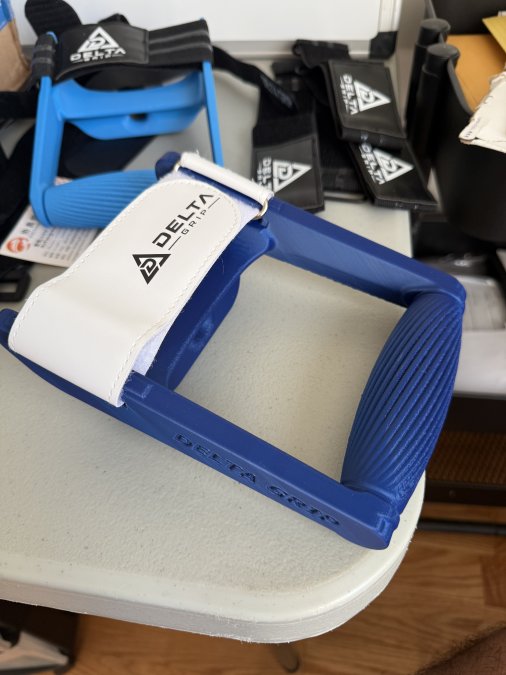
**1. Plenty of handles marketed as neutral allow a few degrees of rotation, which lets tension leak back into your grip. The Delta Grip's wrist-locking design holds that position rep after rep, transferring load toward the forearm and away from your grip.
2. Compatibility With Your Cable Machine This is where most buyers get burned. Check three things before you commit:
- Attachment point: Confirm the handle's connection matches your machine's carabiner or pin attachment.
- Bar diameter: Measure your bar first. A handle sized for a 1-inch bar won't sit correctly on a thicker one.
- Cable length and pulley height: Set the pulley at the height the movement calls for. If your machine has limited adjustment, plan your exercises around that.
3. Grip Surface and Sweat Handling You want a surface that stays secure when your hands are sweaty without forcing a death grip. A textured or knurled surface helps, but the bigger factor is the wrist lock: when your wrist can't rotate, you don't have to squeeze as hard to keep the handle stable.
4. Frame Design and Shoulder Freedom An open frame lets your shoulders move through their natural arc, which matters on flyes, lateral raises, and any movement where you want a full stretch and contraction. A closed frame can cap your range of motion before the target muscle is fully loaded. This is one of the main reasons we favor an open frame design on the Delta Grip.
5. Construction and Longevity Look at the welds, the connection point, and the grip material.
6. What These Handles Don't Do A neutral grip handle is a tool, not a fix-all. It won't correct poor shoulder mechanics on its own, and it isn't a substitute for a bar on compound lifts like the bench press or deadlift. If you have an existing wrist or shoulder issue, check with a qualified professional before adding a new attachment to your training.
How to Compare Two Handles Side by Side Score each option on five points: wrist lock (does it truly hold neutral?), compatibility (does it fit your machine and bar?), grip surface (does it stay secure when sweaty?), frame design (does it allow full shoulder range?), and construction (will it last?).
For a closer look at how the Delta Grip handles each of these points, visit https://thedeltagrip.com, and check the Exercise Guide tab for setup and usage demonstrations.
Neutral Grip Cable Exercises for Chest, Shoulders, and Back
Neutral grip attachments earn their place across every push and pull pattern in a bodybuilding split. Here's how we program them, with cues that keep the wrist locked and the target muscle loaded.
Cable Chest Press Set the pulleys at mid-chest height, stand in a split stance, and press with your wrists locked in neutral.
Machine Rows and Cable Rows For back thickness, row with a neutral grip and drive your elbows straight back, not out. The locked wrist keeps your forearms from taking over, the usual failure point on high-volume rowing.
Lateral Raises and Front Raises Shoulder isolation is where the open frame pays off. With a neutral grip, you can raise through a full arc without your wrist collapsing or your shoulder rolling forward.
Tricep Extensions and Pressdowns Overhead extensions and pressdowns both clean up with a neutral grip. Your elbows stay in line with the cable, your wrists stay stable, and your triceps take the full load instead of your hands.
Lat Pulldowns and Pull-Ups A neutral grip on pulldowns and pull-ups shifts emphasis toward the lats and away from the biceps and upper traps. Pull with your elbows, not your hands, and think about driving your elbows down toward your ribs.
How to Slot These Into a Split A simple pattern we use: one neutral grip press on push day, one neutral grip row or pulldown on pull day, and one neutral grip isolation for shoulders or triceps as a finisher.
For demonstrations of each of these movements, see the Exercise Guide tab on our site.
Neutral Grip Lat Pulldown Attachment: Technique and Muscle Engagement
The lat pulldown is a foundational back exercise, and your grip changes which muscles do the work. A neutral grip lat pulldown attachment shifts emphasis toward your lats while reducing upper back and bicep involvement compared to a wide grip.
The technique: grip with wrists neutral, shoulders slightly retracted, and pull straight down with your elbows tracking close to your body. The neutral position naturally encourages this elbow path because your wrists can't rotate to compensate.
When your wrist is locked and stable, you're free to focus entirely on initiating the pull from your lats.
For higher volume work, the neutral grip lat pulldown is valuable because grip fatigue doesn't interrupt your sets. You can maintain form for more reps and sets without your hands giving out first, training your back without compromising rep quality.
Cable Handles for Chest Exercises: Maximizing Pectoral Tension
Pair that with a neutral grip handle, and your pecs become the sole focus.
On cable chest presses, the neutral grip reduces involvement of your anterior delts and triceps, so more work falls to your chest. The pecs work harder because they can't offload tension to surrounding muscles.
For cable flyes, a neutral grip handle maintains consistent tension throughout the movement. Your wrists stay locked, your elbows track properly, and your chest stays under tension from start to finish.
The key: cable chest exercises with neutral grip handles force your chest to do the work. There's nowhere for the tension to hide.
Common Mistakes and How to Avoid Them
Mistake 1: Assuming All Neutral Grips Are the Same Not every handle marketed as "neutral grip" actually keeps your wrist locked. Some rotate slightly, which defeats the purpose. Test before committing, your wrist should feel locked, not just encouraged toward neutral. The Delta Grip's patent-pending design addresses this: the wrist-locking mechanism stays locked through the entire range of motion.
Mistake 2: Overloading Too Quickly When you first switch to a neutral grip attachment, your target muscles will feel the work more intensely. You may need to reduce weight temporarily. Your nervous system adapts within a few sessions.
Mistake 3: Ignoring Shoulder Position Even with a neutral grip, your shoulder position matters. If you're shrugging or internally rotating, you're still compensating. Keep your shoulders packed and stable, the neutral grip locks your wrist, but you still control your shoulder mechanics.
Mistake 4: Not Adjusting for Exercise Type A neutral grip that works for cable rows might need slight adjustment for chest work. Experiment with hand positioning and elbow angle for each movement. The principle stays the same; execution varies by exercise.
Mistake 5: Skipping the Exercise Guide If you're new to a specific neutral grip attachment, review proper form before loading heavy. Visit the Exercise Guide tab on our site for demonstrations of neutral grip cable exercises. Form matters more than weight when learning a new tool.
Conclusion: Making the Right Choice for Your Training
Neutral grip handles aren't a gimmick. They're a legitimate tool for bodybuilders who want to maximize muscle tension, reduce grip fatigue, and improve mind-muscle connection. The wrist-locking design transfers load away from your grip toward your forearm and target muscle, so you can train harder and longer without compensation patterns.
If your grip gives out before your chest, back, or shoulders are truly fatigued, a neutral grip attachment solves that directly. If wrist discomfort distracts you during high-volume cable work, the locked position can help reduce it. If you want cleaner form and better muscle engagement, the neutral position delivers.
The Delta Grip is engineered for this purpose. Its patent-pending wrist-locking design keeps your wrist stable through the entire range of motion, while the open frame lets your shoulders move naturally. Whether you're training delts, pecs, back, or triceps, the Delta Grip provides the stable platform you need for maximum output.
Get started with The Delta Grip and experience the difference a truly locked neutral grip makes in your training. Visit https://thedeltagrip.com to learn more, and check the Exercise Guide tab for demonstrations of how to use neutral grip handles across your entire training split.
Frequently Asked Questions
What is a neutral grip, and why does it matter for bodybuilding?
A neutral grip positions your hands with palms facing each other, rather than facing forward or backward. This grip reduces wrist strain and shifts tension away from your forearm and grip strength, allowing you to focus on the target muscle, whether that's your chest, shoulders, or back. For bodybuilders, this means heavier loads and better muscle engagement without grip fatigue cutting your sets short.
Can neutral grip cable handles reduce grip fatigue during high-volume sessions?
Yes. By locking your wrist in a neutral position and transferring load toward the forearm, neutral grip attachments significantly reduce the demand on your hand and grip muscles. This allows you to maintain tension on your target muscles for more reps and sets before grip becomes the limiting factor, which is essential during high-volume cable training.
What exercises work best with neutral grip cable handles?
Neutral grip cable exercises are effective for lat pulldowns, cable rows, chest flyes, pec deck movements, shoulder raises, and tricep pressdowns. The neutral position is particularly valuable for isolation work where you want to eliminate grip as a distraction and maximize mind-muscle connection with the working muscle group.
How do I know if a neutral grip handle will fit my cable machine?
Most neutral grip cable attachments are designed to work with standard cable machine pin stacks and carabiners. Before purchasing, verify that the attachment's connection point matches your machine's cable system. Check the manufacturer's specifications for compatibility, and if you're unsure, visit https://thedeltagrip.com for detailed compatibility information and our Exercise Guide for setup instructions.
Neutral grip cable work isn't optional for serious bodybuilders, it's foundational. The question isn't whether to use a neutral grip attachment, but which one delivers the stability, durability, and performance your training demands. The Delta Grip is built for athletes who refuse to compromise on either.