

Table of Contents
- What a Neutral Grip Cable Attachment Actually Changes
- Neutral Grip Cable Attachment Benefits: Grip Fatigue and Muscle Tension
- Neutral Grip Cable Handle Exercises for Shoulders, Chest, Back, and Triceps
- The Best Cable Attachments for Back Exercises: Where Neutral Grip Fits
- How to Choose Cable Machine Attachments: Fit, Grip Width, and Build Quality
- Neutral Grip vs Standard Cable Handles: When the Switch Pays Off
- Conclusion: Who Should Buy a Neutral Grip Cable Attachment
- Frequently Asked Questions
Last Updated: October 19, 2026
What a Neutral Grip Cable Attachment Actually Changes
A neutral grip cable attachment is a handle that holds your palms facing each other through the full range of a cable movement. That single change in hand position alters which muscles take the load, how much your grip limits the set, and how your shoulder joint tracks under tension.
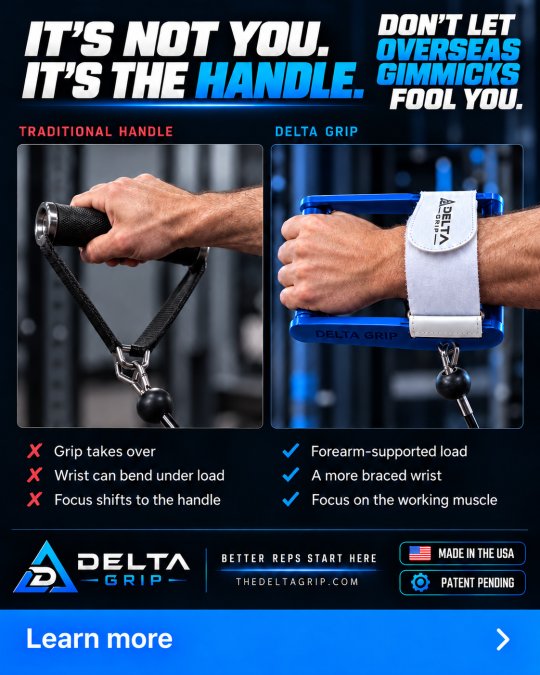
Here is the short version: for some lifters and some exercises, yes, a neutral grip cable attachment is worth it. For others, the standard handles already on the rack do the job.
The difference comes down to load transfer. When your wrist stays locked in a neutral position, the resistance runs through the forearm rather than stalling at the hand.
Neutral Grip Cable Attachment Benefits: Grip Fatigue and Muscle Tension
The main benefit of a neutral grip cable attachment is that it reduces how much your grip limits a set. A pronated or supinated handle asks the forearm and hand to fight for position while you press or pull.
We see this play out most clearly in three areas:
- Grip endurance: your hands stop dictating when the set ends on rows and pulldowns.
- Mind-muscle connection: with less wrist noise, it is easier to feel the delt, pec, or lat doing the work.
- Joint positioning: a neutral wrist often sits more comfortably than a fixed pronated grip for lifters with cranky elbows or shoulders.
What most guides miss is that these benefits are exercise-specific. A neutral grip helps a lateral raise far more than it helps a close-grip pushdown, because the raise depends on a clean, repeatable hand position under moderate load.
We will not promise this prevents injury. It is a positioning tool. Used well, it lets you train the muscle instead of babysitting the handle.
Neutral Grip Cable Handle Exercises for Shoulders, Chest, Back, and Triceps
Neutral grip cable handle exercises span every major upper-body muscle, which is the part skeptics get wrong.
Shoulders. Single-arm cable lateral raises with a neutral wrist keep the delt under tension through the top of the range.
Chest. Neutral-grip cable flyes and low-to-high crossovers let you bring the hands together without wrenching the wrist. The pec stays loaded while the shoulder stays comfortable.
Back. Seated cable rows and lat pulldowns with a neutral grip are where most lifters feel the biggest difference.
A common mistake is loading too heavy on the first session. Start where you can feel the target muscle, not where your ego wants the stack.
The Best Cable Attachments for Back Exercises: Where Neutral Grip Fits
The best cable attachments for back exercises are the ones that let you pull hard without your grip deciding the set. Neutral-grip bars, V-grip attachments, and multi-grip handles all share that trait, and each fits a different slot in back training. What most guides skip is the exercise-by-exercise question: where does a neutral grip actually change the pull, and where is it just a preference?
A neutral-grip bar shines on seated rows and pulldowns. The parallel handles keep the elbows tucked and the lats engaged. A V-grip attachment is the close-grip cousin, good for rowing with a tight elbow path. D-handles give you single-arm control, which helps when one side lags.
Here is how the main options compare for back work:
| Attachment | Grip Position | Best Back Use | Trade-off |
|---|---|---|---|
| Neutral-grip bar | Palms facing | Seated row, pulldown | Less versatile for pressing |
| V-grip attachment | Close neutral | Rows with tucked elbows | Narrow path limits variation |
| D-handles | Neutral, single arm | Unilateral rows | One arm at a time |
| Multi-grip attachment | Several options | All-around back work | Bulkier to store |
| Straight bar | Pronated | Wide-grip pulldown | Wrist and shoulder strain |
Neutral Grip vs Standard Handles, Exercise by Exercise
This is the comparison that decides whether the attachment earns rack space. A neutral grip changes the pull most when the elbow path and hand orientation fight each other on a fixed handle.
- Seated cable row. A neutral-grip bar lets the elbows travel past the torso with the wrists stacked, so the lats and mid-back keep loading as the hands come in. A straight bar forces a pronated wrist and often pulls the elbows wide, which shifts emphasis toward the rear delts and upper traps. This is the clearest win for neutral.
- Lat pulldown. A neutral-grip bar keeps the elbows in front of the body and the shoulders from rolling forward at the top. A wide pronated bar still has a place for lifters chasing a wider elbow path, but many find the neutral version easier to feel in the lats.
- Single-arm row. A D-handle already gives you a neutral wrist, so a dedicated neutral bar adds little here. This is where the switch does not pay off.
- Face pull and high row. A rope or dual D-handles already allow a neutral wrist, so a fixed neutral bar is redundant for these.
Where neutral grip fits best is the middle of a back session: rows and pulldowns where you want volume and a clean lat contraction. The teres muscles and upper back respond well to the parallel hand position because the elbows stay close to the ribs.
Fit and Compatibility Before You Buy
Handle spacing and cable connection matter as much as grip. Most attachments clip to a standard carabiner, but overall width and handle spacing vary enough that a bar can feel wrong on your frame. A medium spacing suits most lifters; a wide bar quietly shifts work off the lats and onto the shoulders. Confirm the clip seats cleanly and the bar does not wobble under load before you commit.
How to Choose Cable Machine Attachments: Fit, Grip Width, and Build Quality
Choosing cable machine attachments comes down to three checks: does it fit your machine, does the grip width match your frame, and will it hold up to heavy volume.
Fit and compatibility. Most cable attachments connect with a carabiner to a standard cable end, but handle spacing and overall length vary.
Grip width and hand position. Handle spacing should let your wrists stay stacked over your forearms. Too wide and the shoulders roll forward.
Build quality and durability. Solid construction with clean welds and a secure clip point matters more than finish.
Comfort and joint position. Grip diameter and any knurling should feel secure without tearing up your palms.
Neutral Grip vs Standard Cable Handles: When the Switch Pays Off
Neutral grip versus standard cable handles is not a contest with one winner. It is a question of which exercises reward a parallel hand position and which do not. The switch pays off when your grip quits before your target muscle, and it is a waste when the standard handle already does the job. Most guides stop there. We will go further and give you the decision framework they skip.
A neutral grip cable attachment earns its spot when:
- You train shoulders, chest, back, or triceps at high volume and grip fatigue cuts sets short.
- Fixed pronated handles push your wrist into an uncomfortable angle.
- You want a cleaner mind-muscle connection on isolation work.
- You are chasing heavier, more controlled accessory work without losing form.
A standard handle still makes sense for wide-grip pulldowns, straight-bar pressdowns, and any movement where a pronated or supinated grip is the point.
Who Should Buy, by User Type
The value question depends on who you are and what you already own.
- Beginners. You do not need a dedicated neutral bar yet. Learn the movements on the standard handles first, then add a neutral option once grip fatigue is the clear limiter.
- Home-gym owners. A multi-grip attachment with a neutral option covers more ground per dollar than a single-purpose bar. If you already own one, a dedicated neutral piece is redundant.
- Commercial-gym users. The rack usually has D-handles and a V-grip, which already give you a neutral wrist on many pulls. A dedicated neutral bar is worth it mainly if you want a consistent, wrist-locked feel across rows and pulldowns.
- Lifters with grip or shoulder comfort concerns. This is the group where the switch tends to pay off fastest, because the neutral wrist removes the positioning fight that makes sets end early.
Buying Criteria and the Cost Question
We will be direct: this is a specialized tool, and pricing reflects the design and build. We do not publish prices here because they can change, so check our site for current details. Judge the purchase on three criteria instead of sticker price alone:
- Redundancy. Do you already own a handle that gives a neutral wrist on the exercises you care about? If yes, the upgrade is a want, not a need.
- Frequency. Will you use it most sessions, or once a month? A tool you reach for weekly earns its space; one you forget does not.
- Fit. Does the handle spacing match your frame and your cable connection? A bar that fights your setup is a bar you stop using.
If your current handles beat up your wrists on every session, the upgrade tends to pay for itself in better sets. If your standard handles already feel fine and your grip holds, you can wait.
This is where the Delta Grip differs from a generic neutral handle. Our wrist-locking design locks the wrist in a neutral position and transfers load toward the forearm, so you can focus on the target muscle and the contraction instead of the handle. It is made in the USA with an open frame that allows a natural range of motion. Check the Exercise Guide tab for setup and demonstrations before your first session, and visit our site to see current details.
Conclusion: Who Should Buy a Neutral Grip Cable Attachment
The lifter who should buy a neutral grip cable attachment is the one whose grip gives out before the muscle they came to train.
We built the Delta Grip for the first group: lifters who want the load on the target muscle, a stable wrist, and a handle that keeps up with heavy accessory work. Our wrist-locking design moves the work toward the forearm and lets you chase tension where it counts.
Ready to see if it fits your training? Visit our site to add to cart, and check the Exercise Guide tab for setup and demonstrations before your first session.
Frequently Asked Questions
Is a neutral grip cable attachment worth buying?
It depends on where your sessions break down. If your grip or wrists give out before your back, chest, or shoulders reach fatigue, a neutral grip cable attachment can be worth it because it shifts load toward the forearm and lets you keep training the target muscle. If you only do a few cable sets per week and standard handles feel fine, the upgrade is harder to justify. Match the purchase to how often grip fatigue limits your work.
What are the benefits of a neutral grip cable attachment?
The main benefits are reduced grip and wrist fatigue, a more stable wrist position, and better focus on the target muscle during high-volume cable work. A neutral grip keeps your hand in a handshake orientation, which many lifters find more comfortable on pressing and pulling movements. That can help you maintain tension through a full range of motion instead of cutting sets short when your forearms fail first.
Which exercises can you do with a neutral grip cable handle?
You can use a neutral grip cable handle for lateral raises, front raises, cable chest presses, triceps pushdowns, overhead triceps extensions, seated cable rows, lat pulldowns, and face pulls. The open frame design on the Delta Grip allows a natural range of motion across these movements. Check the Exercise Guide tab on thedeltagrip.com for demonstrations and setup instructions before adding new variations.
Are neutral grip cable handles better than a straight bar?
Neither is universally better. A straight bar with a pronated grip works well for pushdowns and wide-grip pulldowns, while a neutral grip cable handle shines when wrist comfort and grip endurance are limiting your sets. Many lifters keep both and rotate based on the exercise. If your wrists feel strained on straight-bar work, a neutral grip is a reasonable alternative to test for a few training blocks.